30 Jan 2024
SABIC ULTEM™ HU resins, a highlight at MD&M West 2024, can help ease transition from EtO sterilization
 SABIC, a global leader in the chemical industry, will highlight at MD&M West 2024 in Booth #3287 its versatile and durable ULTEM™ HU resins, which can help medical device manufacturers choose alternatives to ethylene oxide (EtO) sterilization. Demand is growing for materials compatible with other sterilization methods in anticipation of a new ruling by the U.S. Environmental Protection Agency (EPA) that may reduce EtO emissions from commercial sterilization facilities. ULTEM HU resins are stable across many popular sterilization processes, providing the potential for multiple use options. These resins can also withstand multiple sterilization cycles. Their excellent retention of strength and color can help reduce breakage and discoloration, thereby potentially extending the useful life of applications made with these materials.
18 Jan 2024
SABIC ICEhouse™ returns to Davos for the 8th time as an iconic hub showcasing sustainable innovation & collaboration
 SABIC, a global leader in the chemical industry, is showcasing its iconic ICEhouse™ now for the 8th year during the World Economic Forum annual meeting taking place in Davos, Switzerland from 15-19 January, 2024.
13 Dec 2023
SABIC, SD & Linde enter strategic collaboration to explore opportunities for decarbonization in chemical industry
 SABIC, a global leader in the chemicals industry, Scientific Design (SD), an affiliate company licensing leader in Ethylene Glycol Technology and Linde Engineering, a subsidiary of Linde, a leading global industrial gases and engineering company, have entered into a Memorandum of Understanding to explore collaboration opportunities to decarbonize the SD Ethylene Glycol Process. This collaboration seeks to develop innovative solutions to reduce carbon footprint and achieve low-carbon emissions technology by offering SABIC's innovative CO2 recovery and purification technology to SD licensed manufacturing glycol plants worldwide. The ultimate goal is to establish sustainable Ethylene Oxide and Ethylene Glycol production and set industry benchmarks for carbon-neutral industries.
28 Nov 2023
SABIC & CJ Cheiljedang collaborate on world-first ready-to-eat rice packaging bowls made with 25% certified renewable PP
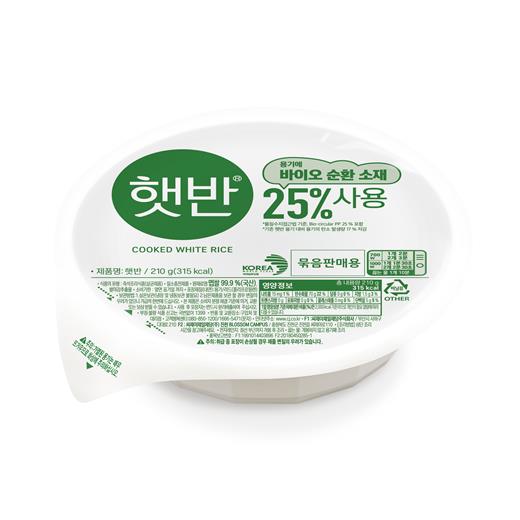 SABIC, a global leader in the chemicals industry, has announced that a food-contact grade of its TRUCIRCLE™ portfolio of certified renewable polypropylene (PP) resins is used in the production of Hetbahn ‘햇반’ instant white rice packaging bowls by CJ CheilJedang, a South Korea-based global food company. The rigid bowls are the first of their kind using certified renewable PP in a ready-to-eat-rice packaging in Asia Pacific and align with CJ’s strong ‘Nature to Nature’ sustainability roadmap.
25 Oct 2023
SABIC reduces carbon footprint in collaboration with Charge Amps through certified renewable LEXAN™ polycarbonate for electric vehicle charger housings
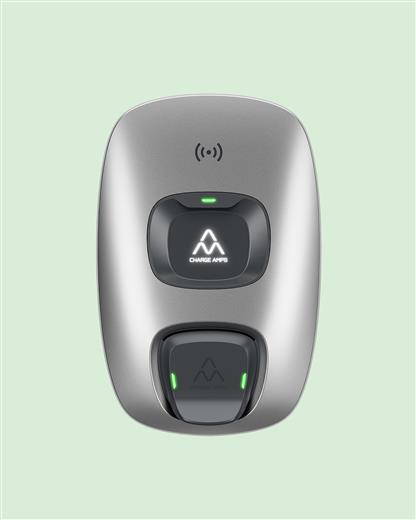 SABIC, a global leader in the chemicals industry, is enabling Charge Amps to manufacture electric vehicle (EV) chargers with a housing made from certified renewable polycarbonate (PC), a first for the industry.
17 Oct 2023
SABIC debuts higher PCR content LNP™ ELCRIN™ copolymer resin with enhanced performance
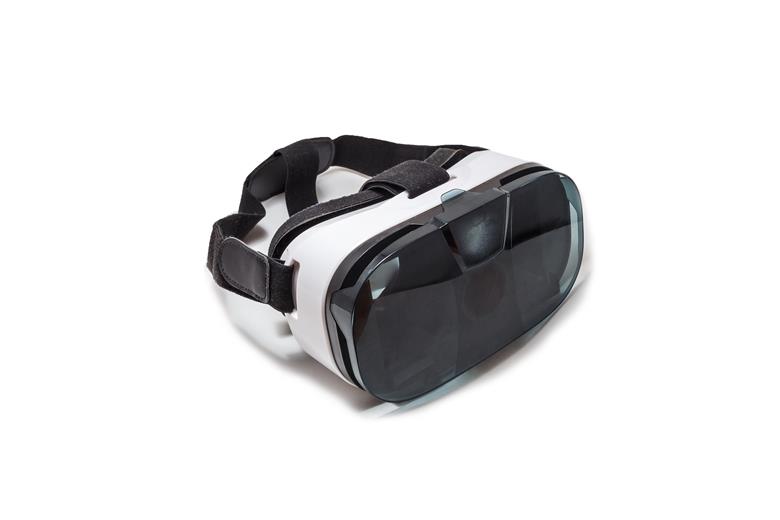 SABIC, a global leader in the chemical industry, today launched a new portfolio of 10 LNP™ ELCRIN™ copolymer resins that can reduce carbon footprint while delivering desirable performance properties and aesthetics. Adopting these polycarbonate (PC)-based copolymer materials, which contain up to 75 percent certified post-consumer recycled (PCR) content, can help customers advance their sustainability initiatives without sacrificing key attributes. Compared to competitive impact-modified PC resins containing PCR content, which can have performance limitations, the new LNP copolymer resins deliver high performance across the board. Depending on the grade, they may provide low-temperature ductility, chemical and weathering resistance, good flow for easy processing, transparency, a broad color space, UV stability and thin-wall flame retardance (FR) meeting the UL94 V-0 rating at 0.6mm.
19 Sept 2023
SABIC’s LNP™ STAT-LOY™ compound is used by INTELLINIUM as enabler for their next-gen ATEX smart personal protective equipment
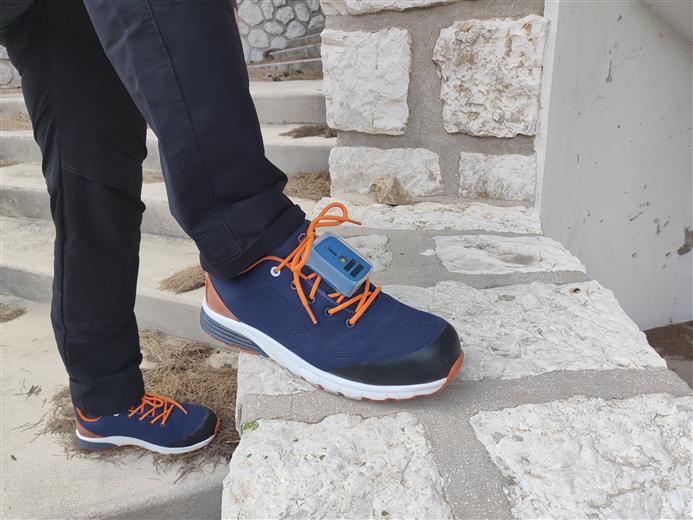 SABIC, a global leader in innovative material solutions, and INTELLINIUM, a leading provider of advanced safety solutions, are pleased to announce a successful collaboration that led to the development of ATEX-certified Personal Protective Equipment (PPE) utilizing SABIC’S LNP™ STAT-LOY™ compound.
12 Sept 2023
SABIC’s innovative solutions wins 2023 R&D 100 Award
 SABIC has been named a winner of the 2023 R&D 100 Award, a global science and innovation competition, for its innovative solution, demonstrating how the company is continuing to invest in technology and innovation across multiple industries to help its global customers develop and deliver winning solutions.
12 Sept 2023
SABIC exhibits disruptive material solutions at The Battery Show North America 2023
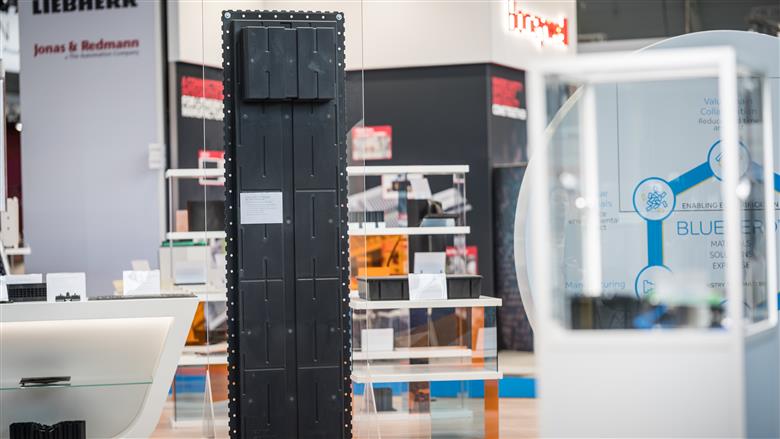 SABIC, a global leader in the chemical industry, is highlighting today at The Battery Show North America 2023, in Booth #2905, its latest breakthroughs in advanced polymers and specialty engineering resins for potential use in electric vehicle (EV) batteries and energy storage systems.
11 Sept 2023
SABIC and partners introduce first in-mold labeling solution with certified renewable polymers for food packaging containers
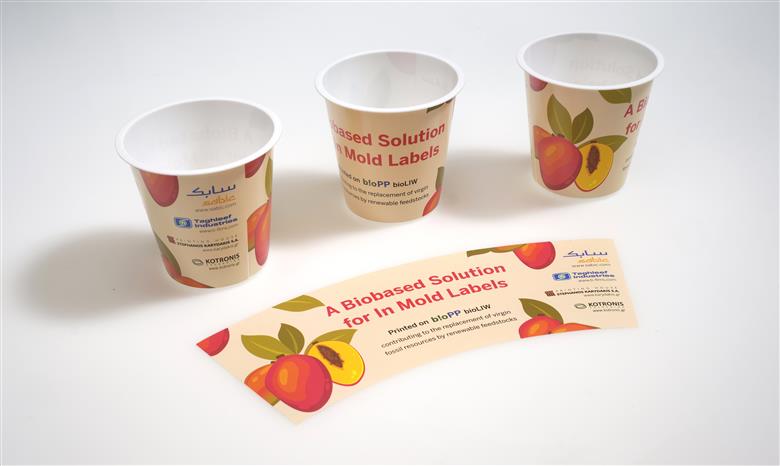 SABIC, a global leader in the chemical industry, has partnered with three specialists in the field of in-mold labeling (IML) to demonstrate the use of certified renewable polypropylene (PP) resins in high quality mono-PP thin-wall container packaging without compromising quality, processability, safety or convenience. The single-step IML technology achieves a seamless part decoration right in the injection mold, where the label becomes an integral component of the packaging itself. Dedicated label film types and high-definition printing technology result in a very attractive and cost-effective decorative solution. Besides using certified renewable PP resins for both the molded parts and the label film, the resulting packaging can be recycled in existing rigid PP recycling streams.
4 Sept 2023
SABIC and SINOPEC announce commercial operation of PC plant at joint venture SSTPC
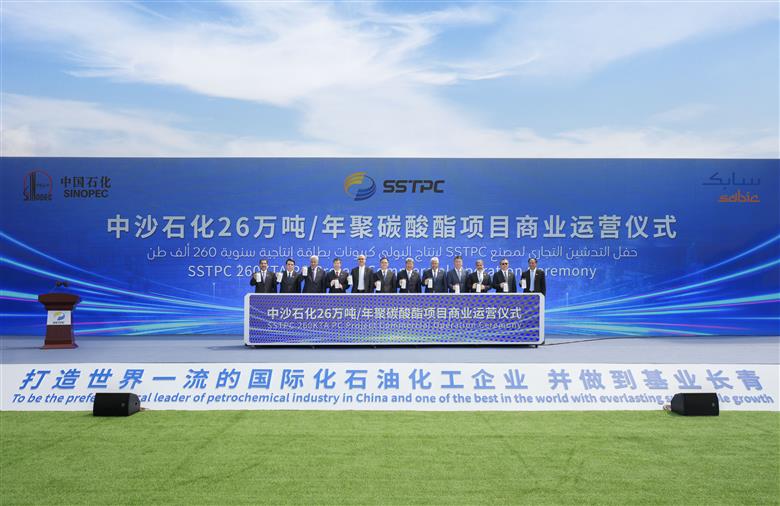 SABIC and SINOPEC announced the commercial operation of a new polycarbonate (PC) plant at their 50-50 joint venture (JV) – SINOPEC SABIC Tianjin Petrochemical Co. Ltd. (SSTPC). Khalid Hashim Al-Dabbagh, SABIC Chairman and Ma Yongsheng, SINOPEC Chairman attended the ceremony.
22 Aug 2023
SABIC’S STAMAX™ 30YH570 resin is first polymer to earn a UL verified mark for thermal runaway protection of EV battery systems
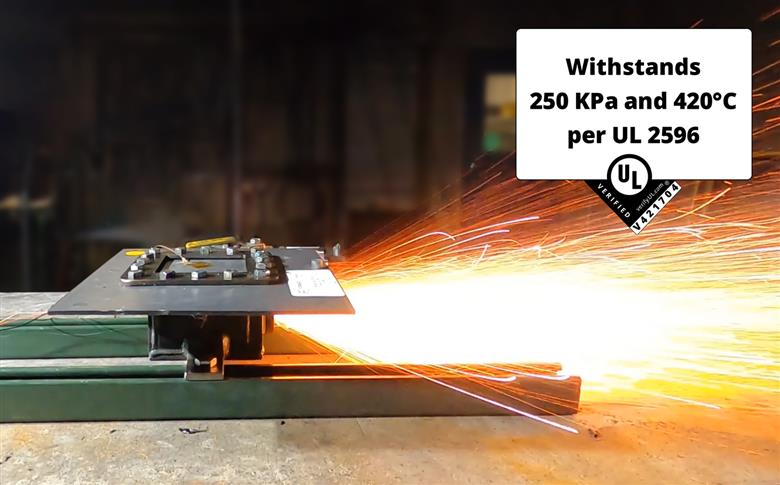 SABIC, a global leader in the chemical industry, today announced that its STAMAX™ 30YH570 resin has earned the UL Verified Mark from Underwriters Laboratories. This 30 percent glass fiber-reinforced copolymer resin, a featured product offered under the company’s BLUEHERO™ electrification initiative, is the first polymer used in electric vehicle (EV) battery systems to receive UL Verification for marketing claims of thermal and mechanical performance. UL Verification, based on an objective, scientific assessment by a respected third party, can give customers high confidence in the flame delay performance of this product.